- Aug 27
A New Vibe Every Season: A Conversation with Paige Rechtman
- Caroline Fraissinet
- The Deep Dive
- 0 comments
Sometimes things naturally flow into the next. My conversation with Paige is a perfect example of that. In my conversation with Christina Pellegrino (read my conversation with her in the last Deep Dive here!), we both realized during the interview that Paige and the work she does are extraordinary and so in line with the series' goal of highlighting conversations about work, life, mental health and change.
Paige Rechtman is a therapist and founder of The Furever Forest, a supportive online community for people experiencing pet loss. I found the group following the passing of my cats Tintin and Cheddar in 2025, and have found so much comfort in connecting with others who are experiencing similar feelings following the loss of their beloved pets. Paige, inspired by her beloved cat, Squiggles, created the community so that others can go to feel less isolated, less alone, and have more hope for getting through it.
She wrote and illustrated a beautiful book called It's All the Same Forest about her relationship with Squiggles, along with journal prompts and activities for readers who may be experiencing grief surrounding the loss of their pets.
Beyond pet loss, Paige is a creative herself, and she's found inventive ways to bring creative arts into her therapy work and into how people process their feelings. (My personal favorite is a new one in the Furever Forest: Zen doodling!)
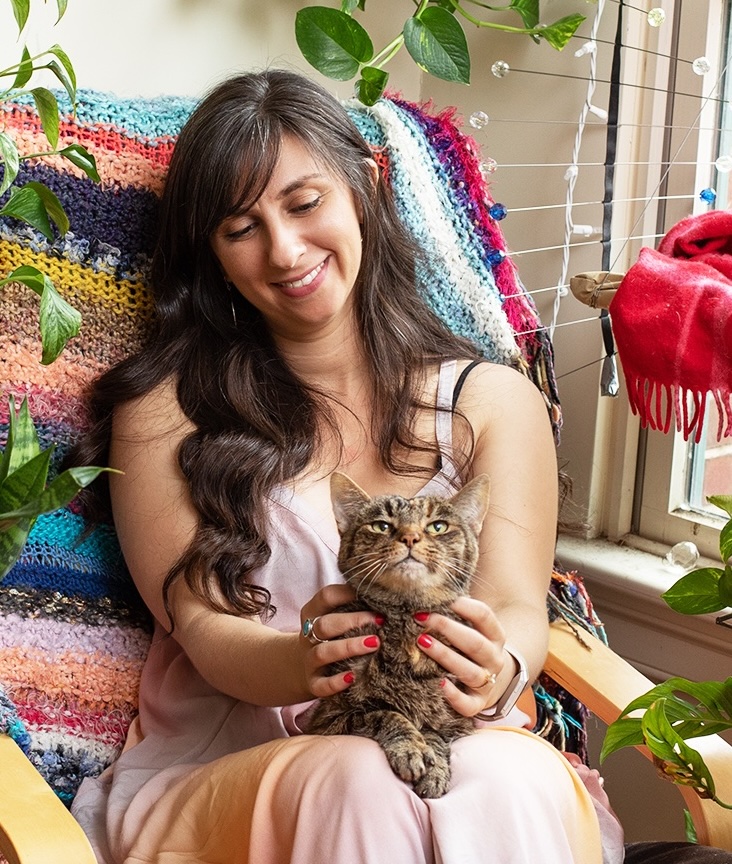
Paige and her beloved cat, Squiggles
We had a great conversation about mental health, creativity, grief, community…and knitting! I hope you enjoy it.
Tell me a little bit about yourself — who are you, and how do you typically describe what you do?
I'm a psychotherapist in Brooklyn…for almost 10 years. Currently I work virtually with individuals — I have a private practice, and I work with people on a variety of different issues around mental health. It started off mainly with anxiety, some OCD stuff, body image, and burnout. I sometimes say I'm also a generalist, because lots of stuff can pop up when you're working with people. After my cat Squiggles died, I added pet loss to the mix of what I do, which has been more rewarding than I expected.
Generalist is a great way to describe that — anxiety, burnout, it's so universal. What led you to become a therapist?
I've been in therapy for most of my life, because my dad passed away when I was young, and my mom had our whole family in therapy when he was diagnosed with cancer. So it's always been part of my life. I didn't know there was a stigma around therapy until I became a therapist, because for me it was always normalized.
I was pretty lost for a long time — I didn't know what I wanted to do. Eventually it just clicked: oh, I could be a therapist, that might work. So I went to grad school, and honestly I didn't know what I'd do with it. But I always knew I was really into holistic health and wanted to use creativity and spirituality as part of the work. And I've landed here now, and it's great. I love it.
You [describe] anxious thoughts as being like a tangled ball of yarn. How do you help clients untangle?
Oftentimes anxiety or stress doesn't show up as a clear thought — it's almost images, or words, or just a blur in our mind. When you're in therapy and talking to someone, you can slow down and really describe what's going on. In our own heads we sometimes can't do that — you have to talk it out, or write it out. There are ways to make it less jumbled.
I'd say getting more specific with details: what is it you're stressed about, why, has this happened before, what are the beliefs underneath the thoughts and feelings? There's so much to unpack, and that can be very difficult for people to do on their own when they're already overwhelmed.
You're so open about your personal experience — weaving your hobbies, interests, and feelings into your professional presence, as you put it on your website. How does that show up in the way you work with clients?
In the Furever Forest, when I make content I'm much more open — I share my experience because that's what I know. In therapy sessions I do less of that. Usually there has to be an intention behind it. I'm not one of those therapists who can never share anything — if I can relate to something or validate it in some way, of course I will. But that's more the exception in session.
Furever Forest is more experimental for me — [it's] a nice way to take my therapist hat off and be involved in a different way. There's room and space for me to show different sides of myself, whereas in therapy, that's not necessarily why people come.
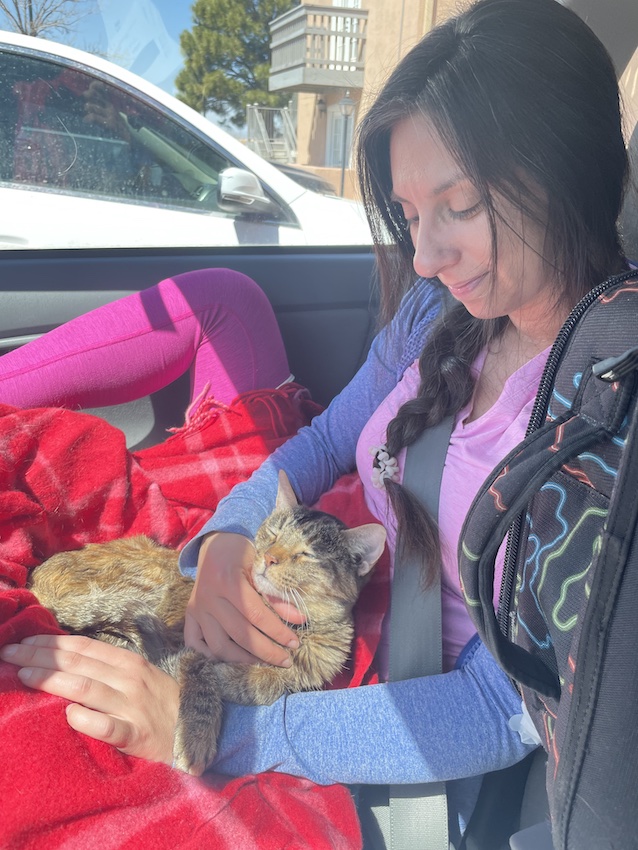
Paige and Squiggles on a road trip!
You focus on pet grief support, and you speak so beautifully about navigating your own grief after Squiggles passed away. How did the idea for Furever Forest come to you?
It's hard for me to describe how it came about, honestly, because I never thought I would do pet loss work — ever. It was too hard to even think about while Squiggles was alive, and it's even harder now. It just wasn't something I was ever excited to do.
I was working with a coach I'd known for a long time, and we met a few months after Squiggles died. I was telling her about the book I was making — I'd always wanted to make a book, and after she passed I was finally able to create it. I mentioned I wanted to do something extra, outside of therapy, to get my creative juices flowing, and she said, "Paige, why don't you look into pet loss?" I said no, no, no — and she said, "You could help so many people. It's so needed." I would never have thought of it myself.
So I looked at some pet loss groups on Facebook. I also should mention — after Squiggles died, I wrote a blog post about the experience. It was hard to write. I cried. It took me well over a month, going back and forth. Once people saw it, they started writing to me. I brought that back to my coach, and she said, "That's obviously something you should be doing." So I started my own Facebook group.
I'd also been part of online [communities] for a while. As a member, it's nice to connect with people you'd never meet otherwise, with the same interests or the same kind of work. Therapy one-on-one has an intimacy that's helpful in certain ways, but there's something about a hive mind — you get so much from more people online. It amplifies the information and insight that gets shared.
That made me think: maybe I could do one for pet loss. So I posted, I planned for it, and I tried it out. It's been so fulfilling — it's really fed the creative side of me. I love being a therapist, but I wanted more variety. I would never have thought of it if someone hadn't pointed it out to me.
I'd love to hear more about the book, It's All the Same Forest, specifically — I love the art, and I was so struck to learn you illustrated it yourself!
I'm still shocked I made it. It was not easy — I'm not a trained artist. I remember when the poem came to me and thought, I need to make this into a book, and then had to figure out how.
My iPad played a huge role, honestly. There's a drawing app called Procreate that's wonderful for people who aren't trained artists. Before COVID I took some classes at Apple on how to use it. If I'd had to do the book on paper with a marker, it would have been so much harder to complete — you can go back, delete, erase, add layers. That's the other thing about creativity: there's often a gap between what you want to make and the skill to make it. Anyone can be an artist, anyone can make something, but people get stuck when they don't have the skills to create what they want. The iPad helped bridge that gap for me.
It wasn't perfect, and part of it was a process thing — you can actually see in the book that my drawings got better toward the end. There's healing in the act itself. The process of moving color on paper is soothing on its own. And then there was the grief part — looking at pictures of Squiggles, creating her, crying. On one of the pages, it says "we meet again" — I bawled my eyes out making that one, in a good way. It was something I had to express. Part of making the book was just: I'm having fun, drawing, letting that energy express itself.
I also read The Creative Act by Rick Rubin. It's wonderful, because putting yourself out there creatively is genuinely hard — the what if no one likes it fear. His approach was: the people who will like it, will, and the ones who don't, that's fine. If you have something in you to put out there, just do it.
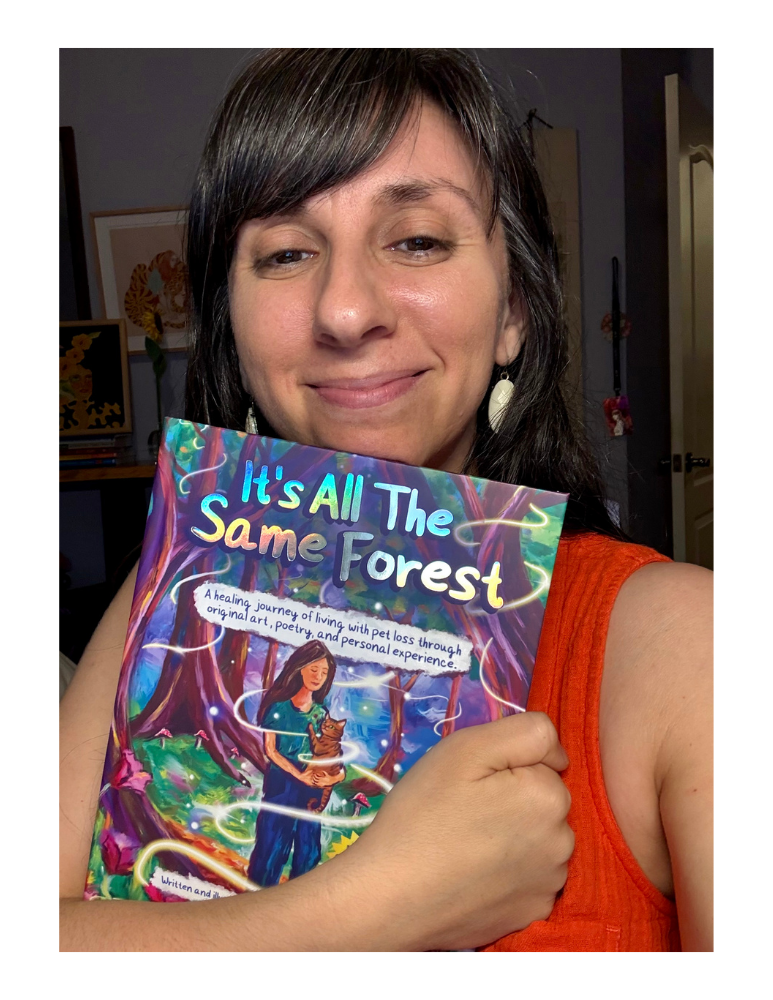
Paige and her book, It's All The Same Forest, which she also illustrated.
Furever Forest has grown into such a supportive community of people processing their feelings together. What has it felt like on your end to watch that happen and be part of it?
It's such an honor — to meet the people in it, and to almost walk beside them during something so challenging. Watching others connect and support each other is heartwarming. Losing a pet can be such an isolating experience, so it's nice to have created a place where people can go to feel less isolated, less alone, and…have more hope for getting through it.
I feel so grateful for everything [Squiggles] brought me while she was alive, and even after — being with you, being with other people in the Furever Forest, and seeing how much she's inspired me. It shows that the grief is always going to be there, but it takes on a new vibe every season. It's been really nice to be able to channel my grief into the community — a positive way to continue having her in my life.
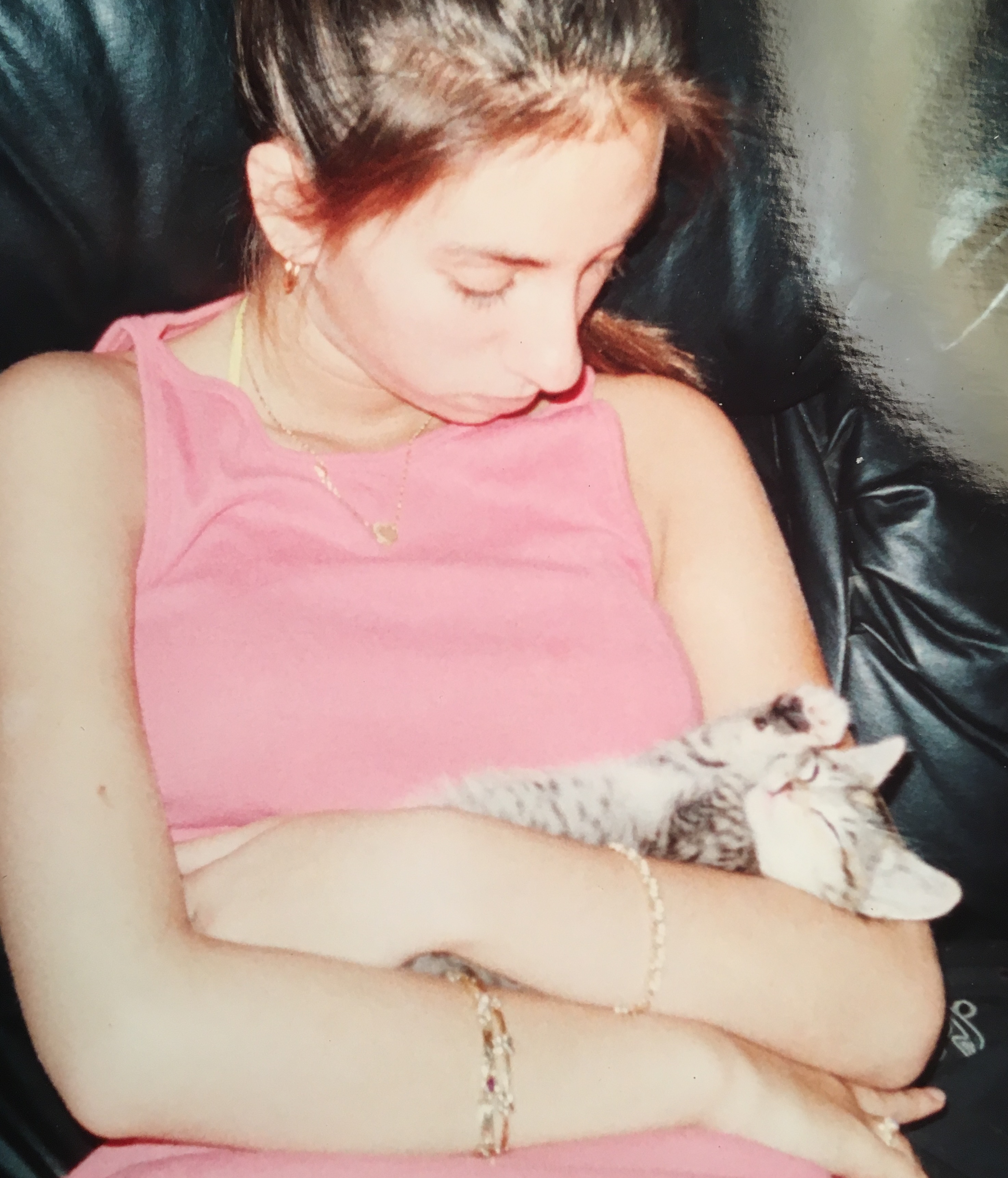
Paige and Squiggles
One thing I love about the Furever Forest is how many different ways you offer for people to process — like Zen doodling, vigils, support groups. Can you speak to offering different ways to process feelings, especially around grief?
There's no one way to do it, and everyone's different. A lot of people join and never say a word, because sometimes it's just that private. I know for myself, I've actually been more of the less-active griever — I withdraw more, typically. But it's still nice to know other people are feeling the same way. Other people need to express it, need to talk, need to share. There are probably other ways of dealing with grief I haven't even encountered yet — there are endless ways people cope.
I personally love adding a creative element to it, because I think creativity is extremely healing. A lot of the most powerful works of art come from pain — a lot of artists use their pain to create. It's very experimental; we're just seeing what works. Sometimes typing something out feels better than speaking it, so we have options for that too.
What is it about creativity that makes it such a powerful tool for processing feelings?
I feel like creativity gets lost for a lot of us. It should almost be a core element of existence — right up there with food, water, shelter, clothing. Of course those are the basics, but I think in order to really live fulfilling lives, we need to create. It's in all of us. It's how humans cope. It doesn't have to be an artistic thing — it could be cooking, or gardening, doing something with your hands. It helps us distract from the spirals that happen, or channel the spirals into something. It's a really natural way for human beings to cope with the harsh reality of life, and we should all be doing it more.
A big thing about creativity is we think we have to know before we begin, but really you just have to start before you know what's going to come up. Make it a practice. And there's something else healing about it too — it brings out the inner child in us. I love the quote, "adults are just children in bigger bodies." Being creative is a great way to access and heal the inner child, and what the inner child needs.
Last question, and I don't mean it just in work terms — what are you focused on now?
My baby! Calvin is so great, my little baby. I've been focused on him, on postpartum self-care, gently moving my body. And just trying to be present and enjoy him while he's still a little potato, before he gets wild and crazy. I never thought I'd be one of those people whose focus is "my baby," but here I am.
I've [also] gotten back into knitting — it's low-pressure but really enjoyable. [Calvin] already got a little sweater, but whatever else I make him, he'll probably grow out of it so quickly, so I'm kind of selfishly knitting mostly for myself. I've been knitting for over 20 years, and just last year I finally made a sweater for the first time!
I love that — I'm a crocheter, and I'm too scared to make clothes, so I'm always impressed by people who do!
I'm so glad I did. I'd kind of lost my knitting mojo, and then I discovered sweaters are amazing. It seems a lot more difficult than it is. You can just do the steps.
Just like untangling that yarn, right?
Exactly — you just have to start, and try.
You can learn more about Paige at her website, https://paigerechtman.com/, and about Furever Forest at https://thefureverforest.com/. Her book, It's All the Same Forest, can be found here: https://payhip.com/b/Zmayt
All photos are courtesy of Paige Rechtman.